
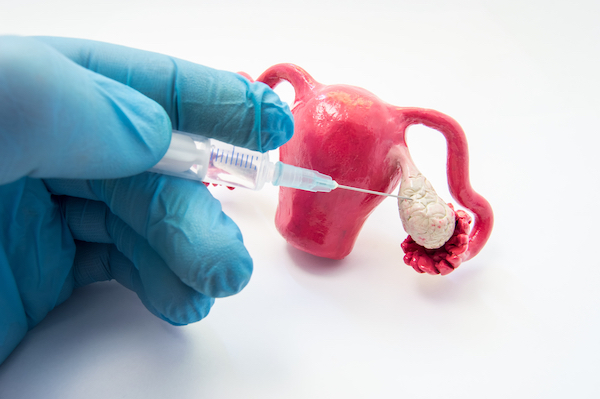
This is usually an introductory treatment for infertility
It involves the use of medication to induce ovulation when sperm is present and therefore increase the chances of achieving pregnancy. The presence of sperm is assured either by timed
intercourse or intrauterine insemination. Ovulation can only be carried out in the
absence of cervico-uterine disease, bilateral fallopian tube blockage and low sperm
count.
Eligibility
Single women, or women who are anovulatory usually associated with polycystic ovarian syndrome.
Couples in long distance relationships.
Couples diagnosed with unexplained infertility.
How it works
This can either be natural or medicated. A natural cycle is dependent on hormones in the body while fertility medications taken at prescribed intervals are used to assist the follicular development in a medicated cycle.
- Transvaginal scans are carried out on days 5 and 8 to assess follicle growth. The goal is to see one or two leading follicles measuring 17mm or higher on day 8.
- Blood can also be drawn during these appointments to ensure the appropriate hormonal levels are present
- Once the leading follicle has been identified and a progesterone value is measured, a 5000 IU injection of HCG (human chorionic gonadotropin) is administered to trigger ovulation. Ovulation will take place approximately 36 hours later
- Timed Intercourse: The patient will be advised to have intercourse before and on the day of imminent ovulation.
- Intrauterine Insemination: washed sperm is introduced straight into the uterus 36 hours after the HCG injection.
A pregnancy test is carried out 14 days after insemination.